
1796 Draped Bust Half Dime
Introduction
First minted in 1796, the Draped Bust Half Dime showcases one of the earliest designs in U.S. numismatic history. As a key representative of early American coinage, this silver half dime is notable for its artistic portrait of Liberty on the obverse side and an eagle motif on the reverse. Despite its small denomination, this coin holds immense historical significance and intrigue for collectors today.
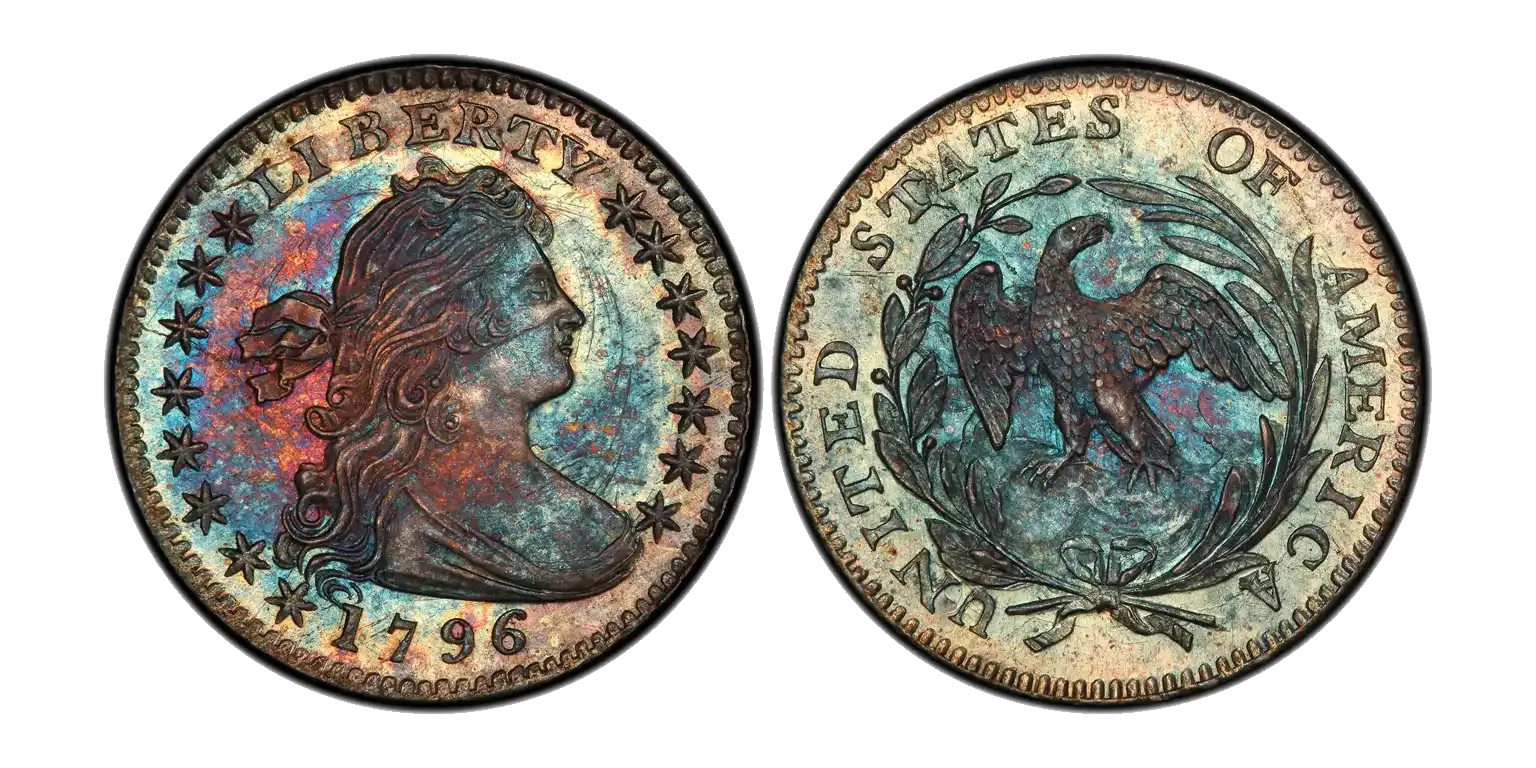
Coin Specifications
| Feature | Description |
|---|---|
| Composition | 89.24% Silver, 10.76% Copper |
| Diameter | 16.5 mm |
| Weight | 1.35 grams |
| Edge | Reeded |
| Designer | Robert Scot |
Mintage
Approximately 22,135 coins were produced in 1796, making the Draped Bust Half Dime a rare find and a coveted prize for numismatists.
Half Dime Values Value
The 1796 Draped Bust Half Dime, is a highly sought-after collector’s item, with its value depending significantly on its condition and rarity. Please note that values are approximate retail ranges, and fluctuations may occur based on grading service, auction results, and market demand.
| Grade | Average Value (USD) |
|---|---|
| Circulated | $5,000 – $18,000 |
| Uncirculated (MS60–MS66) | $25,000 – $40,000 |
| High-Grade Uncirculated (MS67+) | $60,000+ |
| Proof – Clad | Not applicable |
| Proof – Silver | Not applicable |
| Error Coins | Varies widely |
Factors That Influence the Value
Mint Mark and Mintage: The 1796 half dime was minted in Philadelphia, and with a mintage of just 10,230, its relative scarcity heavily influences its value.
Condition and Grade: Coins are graded on the Sheldon Scale, ranging from 1 to 70. The finer the coin’s condition, the higher its value, with anything MS60 and above considered highly collectible.
Metal Composition: The 1796 draped bust is composed of silver, adding intrinsic value due to the precious metal content.
Errors and Varieties: Errors such as die chips, doubling, or missing elements can significantly increase a coin’s value. These verified mint errors are considered unique attributes, making them particularly desirable to specialized collectors.
Rarity and Errors of the 1796 Draped Bust Half Dime
The 1796 Draped Bust Half Dime stands as a rare icon in early American coinage, coveted for its historical significance and potential numismatic anomalies. Collectors are particularly drawn to various minting errors that can significantly impact the worth of these coins.
Known Errors and Varieties
Double Strikes: This error occurs when a coin is struck more than once, leading to doubled images or inscriptions. The market value for double strike errors can range from $2,500 to $5,000+, depending on the visibility and severity of the doubling. The rarity level is categorized as Rare.
Misaligned Die Errors: When the coin’s obverse and reverse are not perfectly aligned, it leads to a misalignment error, often presenting as an off-center appearance. Coins with this error might fetch prices between $1,200 and $3,000+. Such variations are considered Uncommon.
Brockage Coins: A brockage occurs when a coin is struck using another coin instead of a coin die, resulting in a mirrored image. These are highly collectible and can be valued at $4,000 to $7,500+. They are identified as Very Rare, drawing significant interest from seasoned collectors.
Cud Errors: This error manifests as a raised portion of metal, typically due to a die break, affecting part of the design. Estimated values lie between $900 and $2,300+. Such mistakes command attention and are considered Rare.
Planchet Flaws: Imperfections in the coin blank or planchet can yield unique characteristics. Depending on the type and visibility of the flaw, prices may range from $500 to $1,500+. While these errors are more common than others, they still attract numismatic interest.
Price Impact Summary
Minor Errors: Light die chips or subtle defects usually yield minor premiums, enhancing a coin’s desirability without overly inflating its price.
Major Errors: More dramatic mistakes, such as double strikes or brockages, often substantially increase a coin’s value, reflecting their visual impact and rarity.
Condition Impact: Higher grade conditions significantly increase the value of error coins, especially those in Mint State grades. The stark contrast between standard and error features is most valued in visually pristine coins.
Authentication: Validation by third-party services like PCGS or NGC boosts both the trust and worth of these error coins. Proper authentication ensures the error’s legitimacy and provides a reliable valuation framework.
The allure of the 1796 Draped Bust Half Dime lies not only in its historical essence but also in the myriad of errors that continue to fascinate collectors. Understanding and identifying these errors can vastly influence a collector’s engagement with and appreciation for this iconic coin.
Mint Marks & Mintage
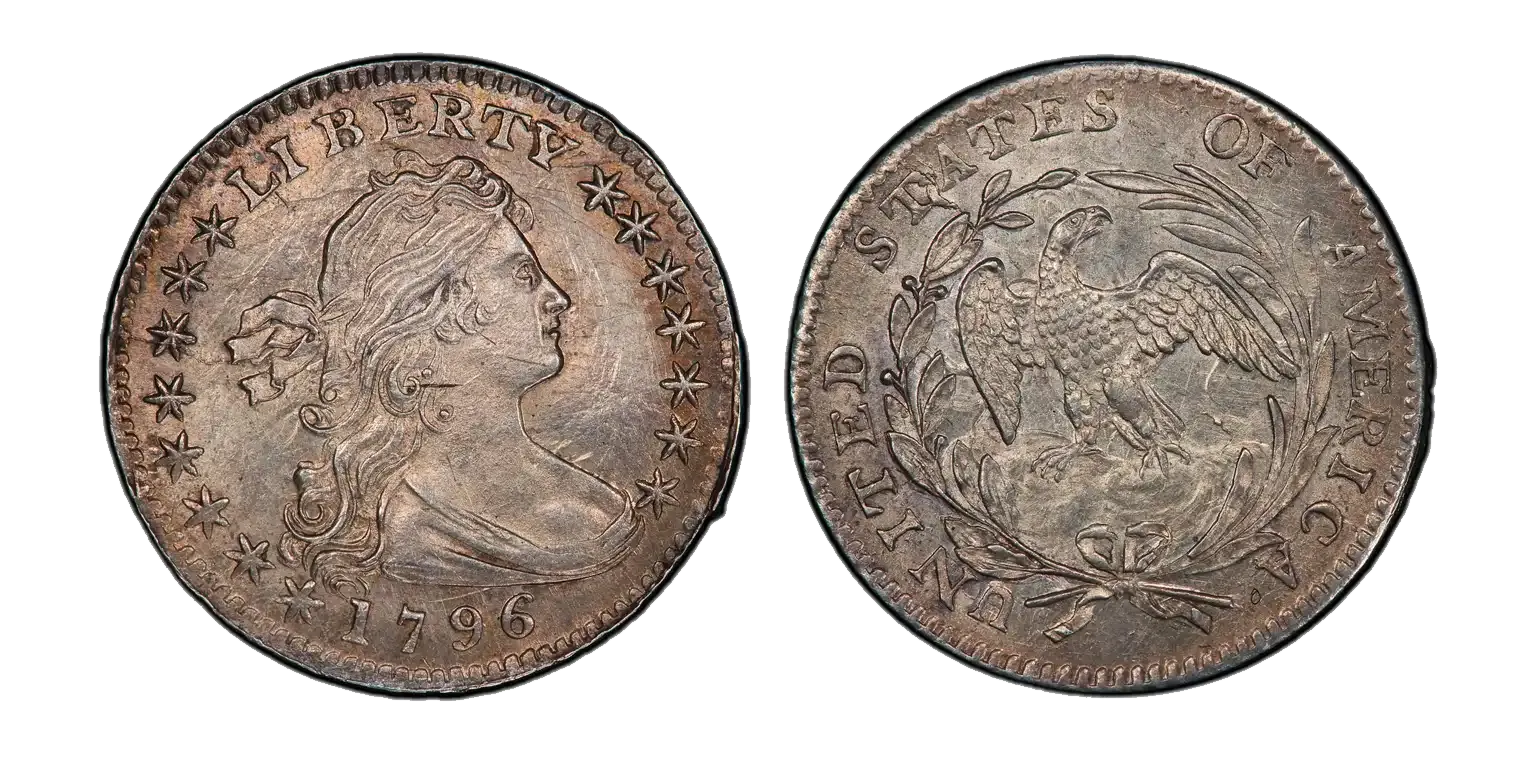
Understanding the mint marks and mintage of the 1796 Draped Bust Half Dime is essential for appreciating its rarity and value. This coin was crafted exclusively at the Philadelphia Mint, and therefore, lacks a mint mark. As with many early American coins, the 1796 Draped Bust Half Dime is part of a small production run due to the nascent stage of the United States Mint and its limited capacity in the late 18th century.
Mintage Table: 1796 Draped Bust Half Dime
| Year | Mint Location | Total Mintage |
|---|---|---|
| 1796 | Philadelphia | Approximately 15,573 |
This relatively low mintage contributes significantly to the coin’s desirability among collectors, as surviving examples are scarce. The absence of a mint mark, paired with the modest quantity minted, underscores the historical significance of these coins.
Collectors should note that the condition of surviving specimens varies considerably, impacting the overall worth and attractiveness of the coin in today’s market. Mint state examples, despite their rarity, are highly prized for their pristine preservation of the original mint luster and details.
In conclusion, the 1796 Draped Bust Half Dime remains a cornerstone piece for numismatic enthusiasts and historians alike, celebrated for both its beauty and its place in the early coinage of the United States.
Half Dime Values Facts and Trivia
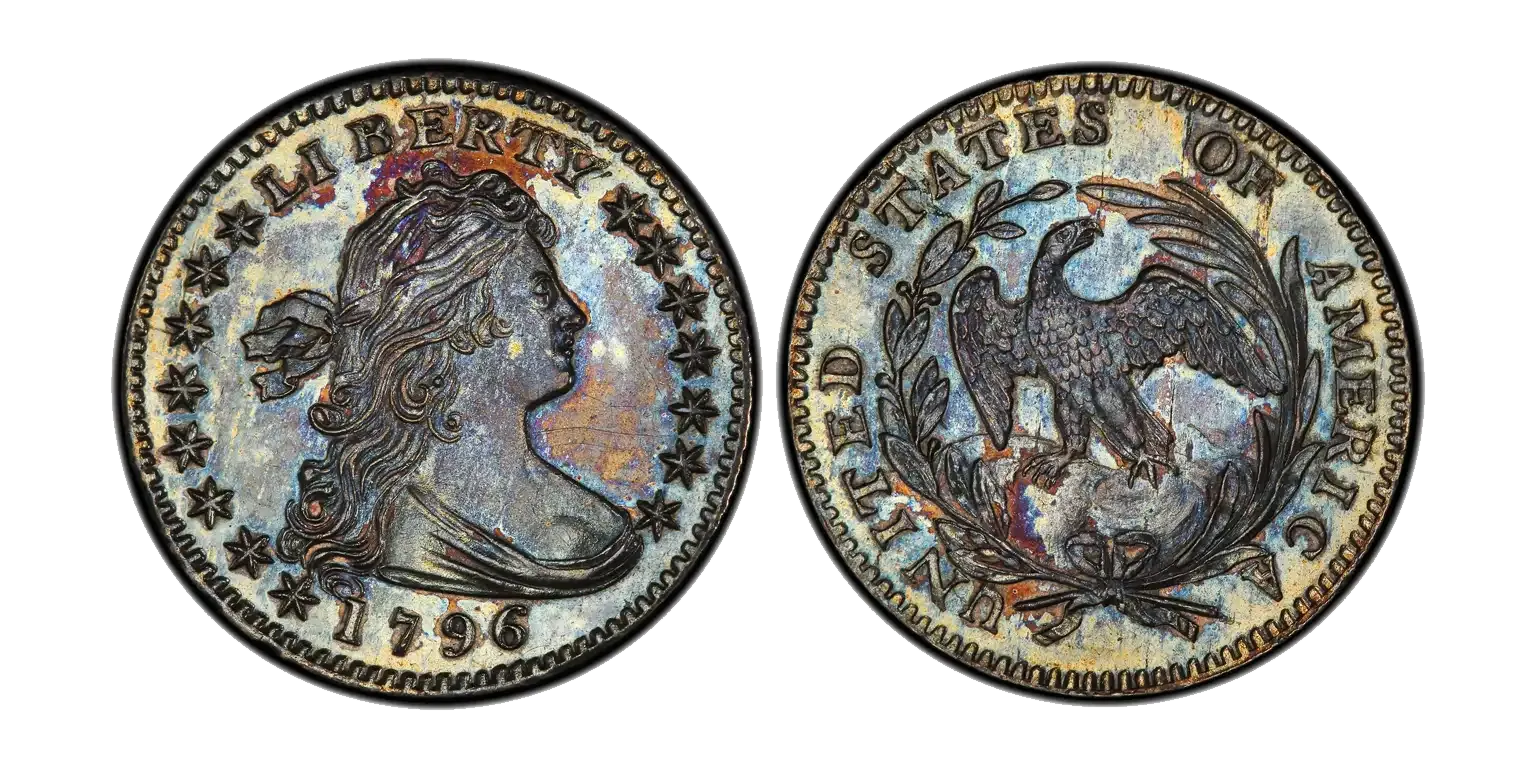
The 1796 Draped Bust Half Dime, is a fascinating coin steeped in the early history of American coinage.
Design Details
- Obverse: The obverse of the 1796 Half Dime features an image of Liberty facing right, surrounded by 15 stars representing the states of the union at the time.
- Reverse: On the reverse, an eagle with wings outstretched is encircled by a laurel wreath.
- Inscriptions: The coin includes the inscriptions “LIBERTY,” “1796,” and “UNITED STATES OF AMERICA.”
- Year: 1796
Release Information
- Release Date: 1796
- Series Context: This coin is part of the Draped Bust series, which was significant for its change from the Flowing Hair design, marking a new era in United States Mint artistry.
- Historical Significance: The coin’s issuance symbolizes a developing nation keen to establish its unique identity through distinctive coinage.
Quick Facts
- The 1796 Draped Bust Half Dime is one of the first representations of the Draped Bust design, which was introduced to enhance the artistry of American coinage.
- This coin’s design was inspired by a portrait executed by Gilbert Stuart, a renowned painter known for his depiction of George Washington.
- The ornamental eagle and wreath style on the reverse was considered a significant improvement over previous designs, laying the groundwork for future U.S. coinage aesthetics.
Collecting the 1796 Draped Bust Half Dime
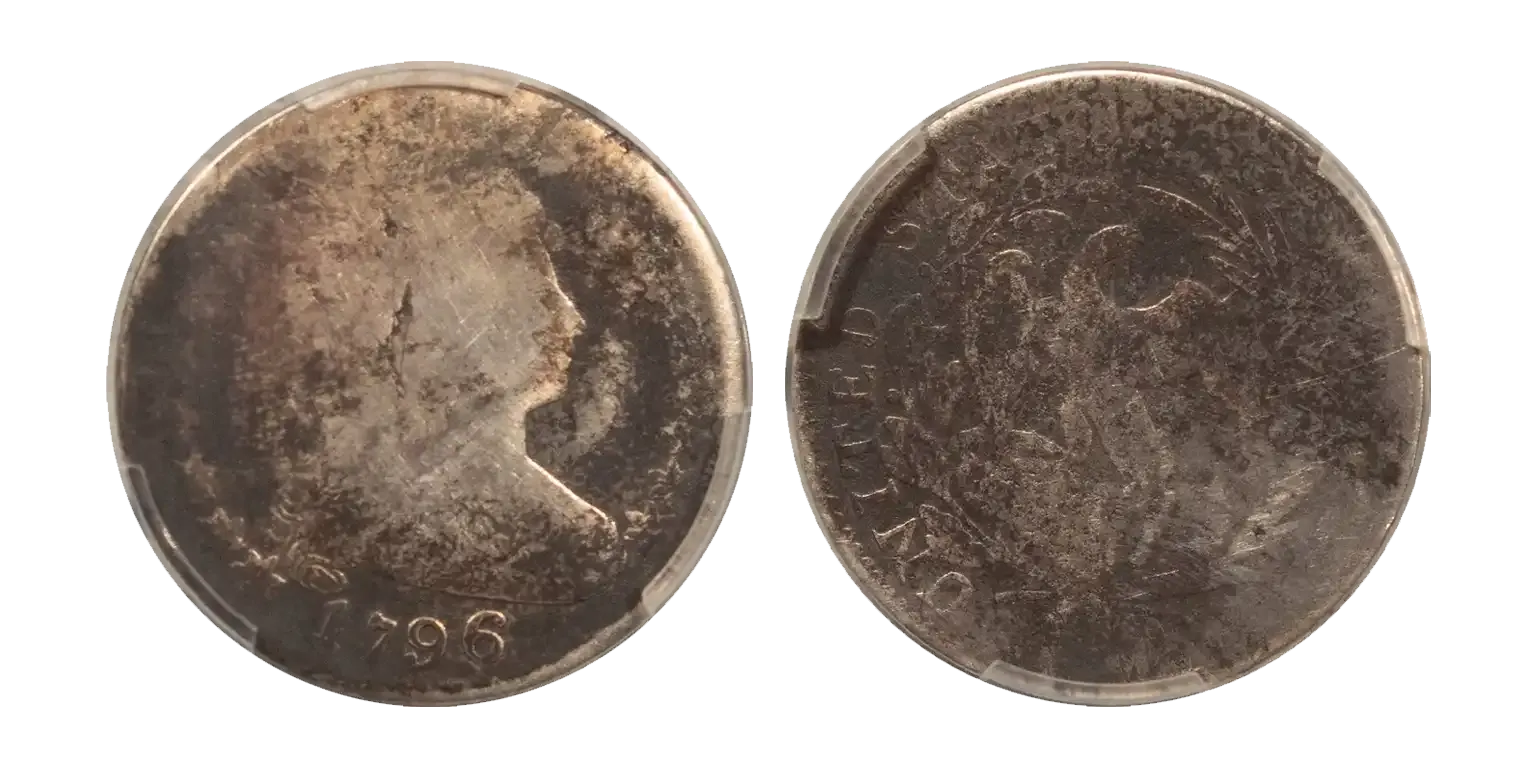
Collecting the 1796 Draped Bust Half Dime can be a rewarding endeavor for both novice and seasoned numismatists. Here are some strategic steps to enhance your collection:
Research Extensively: Start by immersing yourself in the rich history of the Draped Bust series. Understanding the coin’s origins will assist you in appreciating the distinctive characteristics and nuances that separate this coin from others in the series.
Examine Condition and Grade: Utilize the Sheldon Scale to assess the condition of each piece. Lower-graded coins are more accessible, while higher-graded examples can be a premium investment. Consider professional grading services like PCGS or NGC for authentication and grading.
Verify Authenticity: Use professional grading services to ensure authenticity, especially for high-value specimens. Counterfeit coins can be sophisticated, so authenticity verification is critical from credible institutions.
Seek Out Varieties and Errors: Engage with communities or utilize resources such as coin shows to find unique varieties and error coins. These can provide insight into minting anomalies and increase your collection’s value.
Utilize Digital Tools: Enhance your acquisition strategy using the Coin ID Scanner App for iOS and Android to verify space and information rapidly.
Network with Collectors: Building relationships with other collectors can lead to opportunities to purchase or trade coins. Attend local and national coin shows, or join online forums and groups dedicated to early American coins.
Consider Storage Options: Proper storage can preserve your coins’ condition, preventing degradation from environmental factors. Utilize coin holders or albums that are acid-free and designed specifically for long-term storage.
By following these systematic steps, you can build a comprehensive and valuable collection of 1796 Draped Bust Half Dimes while appreciating the rich historical context these coins encapsulate.
FAQs About the 1796 Draped Bust Half Dime
What is a 1796 Draped Bust Half Dime?
The 1796 Draped Bust Half Dime is a rare coin produced by the United States Mint in the late 18th century. It’s one of the earliest half dimes ever minted and features the Draped Bust design created by renowned engraver Robert Scot.
How can I determine the value of a 1796 Draped Bust Half Dime?
To ascertain the 1796 Draped Bust Half Dime’s value, consider its condition, rarity, and historical significance. Consulting coin collector guides and recent auction results can offer insight into its current market price range.
What factors affect the worth of a 1796 Draped Bust Half Dime?
The worth of a 1796 Draped Bust Half Dime is influenced by its grade, historical context, and any unique features such as mint errors or varieties. Coins in better condition and those with rare varieties generally fetch higher prices.
Are there any known errors for the 1796 Draped Bust Half Dime?
While no prominent errors are widely known for the 1796 Draped Bust Half Dime, any anomalies in minting such as double strikes or misaligned dies can significantly increase a coin’s desirability and value among collectors.
Where can I sell my 1796 Draped Bust Half Dime?
You can sell a 1796 Draped Bust Half Dime through reputable auction houses, online coin marketplaces, or to a trusted local coin dealer. Ensure the coin’s authenticity and condition are verified to receive fair offers.
What varieties exist for the 1796 Draped Bust Half Dime?
The 1796 Draped Bust Half Dime is primarily known by its single basic design; however, collectors occasionally find die varieties that can affect value. Numismatic experts can assist in identifying these variations.
How should I store my 1796 Draped Bust Half Dime to preserve its value?
To protect your 1796 Draped Bust Half Dime, store it in a climate-controlled environment using coin holders or albums designed for optimal protection against air and moisture damage. Regular inspections can help maintain its condition.
Is the 1796 Draped Bust Half Dime made of silver?
Yes, the 1796 Draped Bust Half Dime was minted using a composition of 89.24% silver and 10.76% copper. This combination not only provided durability but also enhanced the coin’s visual appeal over time.
Why is the 1796 Draped Bust Half Dime significant to collectors?
Its significance lies in its rarity, historical context, and the Draped Bust design, which marked a stylistic transition for U.S. coinage. These coins are pivotal pieces in understanding American numismatic history.
How does the 1796 Draped Bust Half Dime compare to later half dimes?
Compared to later half dimes, the 1796 Draped Bust features unique artistic value and historical importance as one of the earliest United States coins. The changes in design and minting techniques highlight the evolution of U.S. currency.