
1838-O Capped Bust Half Dime
Introduction
The 1838-O Capped Bust Half Dime, minted in New Orleans, marks the introduction of half dimes from this celebrated mint. Recognized by its distinctive ‘O’ mint mark, this coin is a coveted item among collectors due to its historical significance and scarcity. With its small diameter of only 15.5 mm and composed of 89.24% silver and 10.76% copper, it weighs approximately 1.34 grams. The 1838-O mintage was limited, making these coins particularly prized among numismatists.
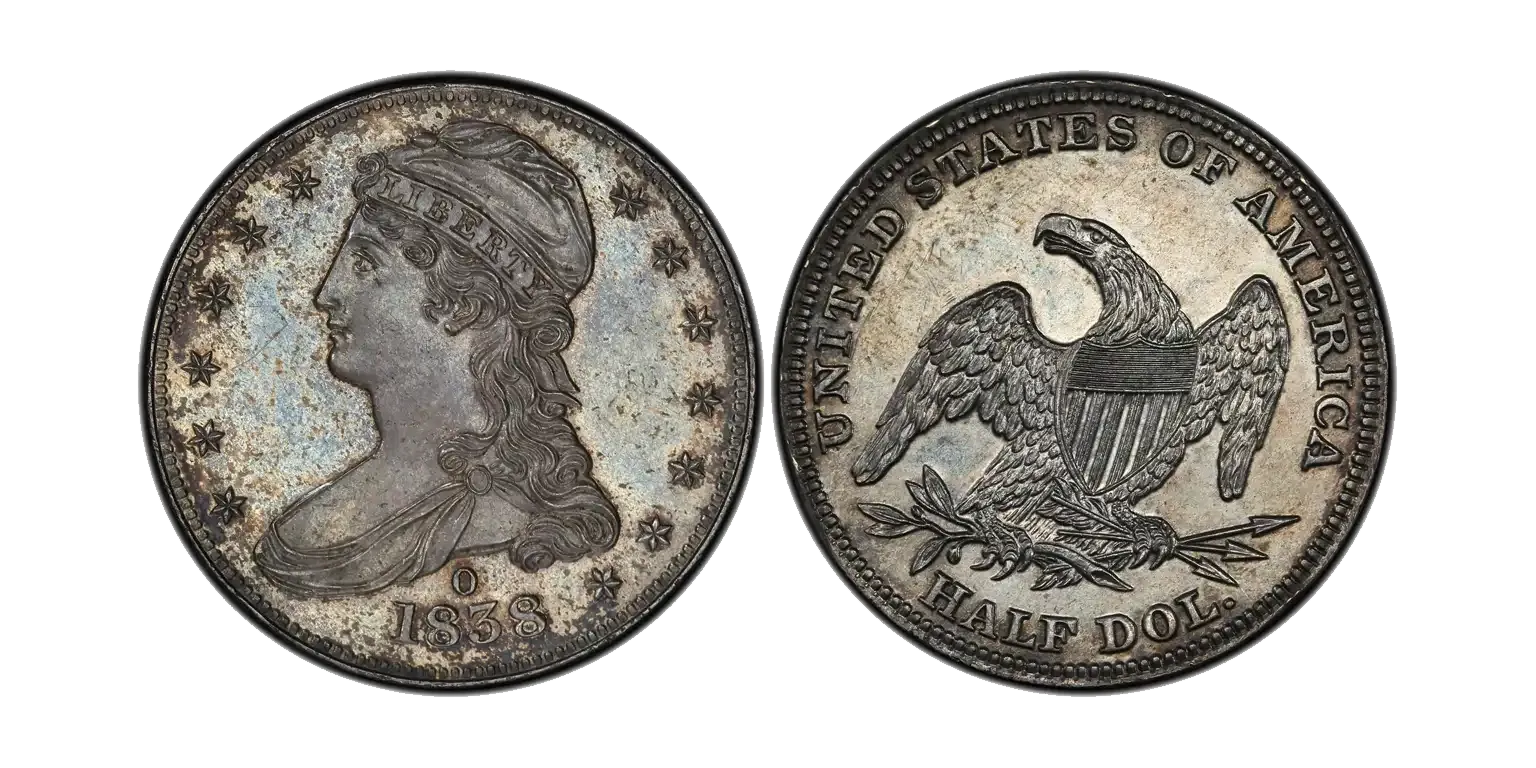
1838-O Capped Bust Half Dime Value
The value of an 1838-O Capped Bust Half Dime can vary significantly, with factors such as rarity, condition, and market demand playing essential roles in determining its worth. As of 2023, these values reflect the current market landscape, where numismatic interest and collector competition can cause fluctuations.
Half Dime Values Value
Prices listed here are approximate retail ranges and may vary due to factors like grading service, recent auction results, and market demand.
| Grade/Category | Average Value (USD) |
|---|---|
| Circulated | $200 – $800 |
| Uncirculated (MS60–MS66) | $2,000 – $3,500 |
| High-Grade Uncirculated (MS67+) | $5,000+ |
| Proof – Clad | Not applicable |
| Proof – Silver | Not applicable |
| Error Coins (e.g., die chips, doubling, missing elements) | $1,000+ |
Factors That Influence the Value
Mint Mark and Mintage: The “O” mint mark denotes the New Orleans Mint, contributing to the coin’s significance and relative scarcity. Limited mintage implies higher demand among collectors.
Condition and Grade: As graded on the Sheldon Scale (1–70), coins in higher Mint State grades command premium prices due to their rarity in top condition.
Metal Composition: While the 1838-O is notably silver, its metal content contributes less to its numismatic value compared to aspects like rarity and condition.
Errors and Varieties: Verified mint errors, such as die cracks or doubling, often result in collectible premiums. These unique features attract keen interest among numismatists for their peculiarity and rarity.
Rarity and Errors of the 1838-O Capped Bust Half Dime
The 1838-O Capped Bust Half Dime, minted in New Orleans, holds significant allure for numismatists largely due to its rarity and the intrigue of potential errors. Collectors highly value this coin, particularly for its historical context as the first year of production of the Capped Bust Half Dime at the New Orleans Mint. Errors on such coins amplify their worth, as they bring a unique element that appeals to specialists seeking pieces with distinctive characteristics.
Known Errors
1838-O Repunched Mint Mark (RPM)
The occurrence of a repunched mint mark is an exciting find. This error occurs when the mint mark is punched into the die more than once, causing a noticeable doubling. These coins can command anywhere from $150 to $500+, depending on the prominence of the error and overall coin quality.
Rarity Level: Uncommon
Caption: 1838-O Half Dime with visible repunched mint mark.Die Cracks and Cuds
Die cracks and cuds form when parts of the die break or chip away, leading to raised lines or blanks on the coin’s surface. Such imperfections can raise the desirability of these pieces to $100 – $300+, especially if they form interesting patterns.
Rarity Level: Common
Caption: Visible die cracks on the 1838-O Half Dime.Clipped Planchet
A clipping occurs when the blank planchet is improperly cut, resulting in a section missing. This error is not only visually striking but also scarce, with estimated values ranging from $200 to $450+.
Rarity Level: Rare
Caption: An obvious clipped section seen on a Half Dime.
Price Impact Summary
Minor errors, such as small die chips or slight off-centering, typically result in modest value increases, as these variations are relatively common. However, major errors like significant planchet flaws or pronounced doubling can significantly increase a coin’s worth due to their rarity and aesthetic appeal.
Higher Mint State grades further elevate error coin values, as their condition enhances their collectability. Authentication by third-party grading services like PCGS or NGC proves crucial, ensuring the error’s legitimacy and boosting market confidence.
Mint Marks & Mintage
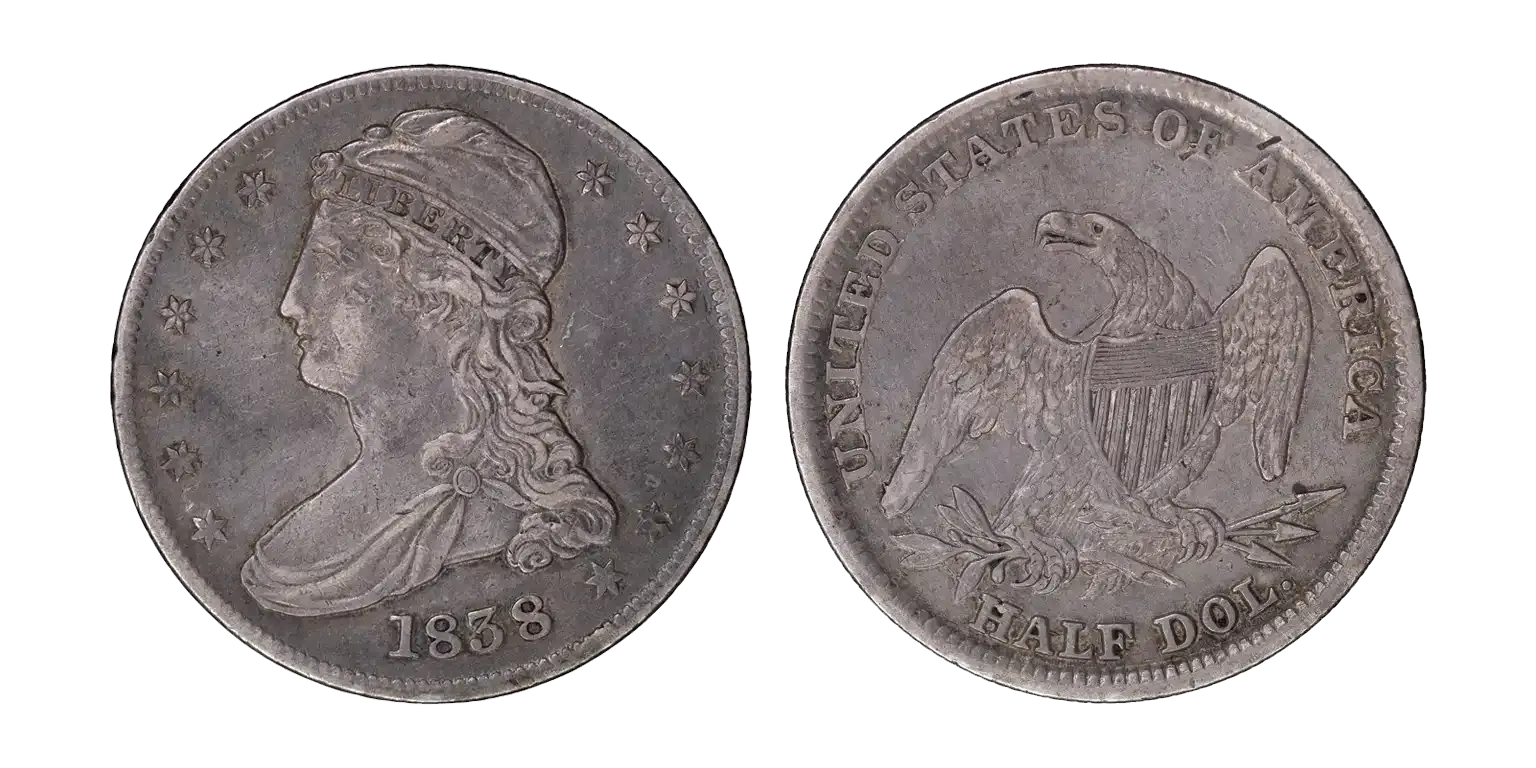
The 1838-O Capped Bust Half Dime is a fascinating piece for collectors, especially due to its significance as the first U.S. half dime produced by the New Orleans Mint. Unlike other mints operating under the U.S. Mint system, the New Orleans facility, marked by the letter “O,” initiated production in 1838. This distinguishes coins minted there with a certain historical allure and rarity, given the particular conditions and technologies of the era.
Mint Mark Location
For the 1838-O Capped Bust Half Dime, the mint mark can be found on the reverse side of the coin. It is positioned below the eagle’s tail feathers, a detail that collectors need to examine closely due to the small size and delicate engraving. Identifying the mint mark correctly is crucial for the valuation and verification of the coin.
Mintage Figure
The overall mintage for the 1838-O Capped Bust Half Dime was reported at approximately 70,000 coins. This relatively low mintage adds to the coin’s scarcity and intrigue, making it a sought-after piece within the numismatic community. Compared to other coin issues from that year, the 1838-O has a unique niche attributed to its limited production run.
| Year | Mint Mark | Mintage |
|---|---|---|
| 1838 | O | 70,000 |
Collectors should note that this mintage figure reflects the pressures and challenges experienced during the 1830s, including economic conditions and the transition of minting capabilities to newer branches like New Orleans. This contributes to the varying quality and condition in which these coins might be found today.
The 1838-O Capped Bust Half Dime offers an exemplary insight into early American coinage and is a testament to the growing infrastructure of minting in the United States during the 19th century. As such, it’s not just its age or design that captivates collectors, but also the depth of history embedded in its mint mark and mintage story.
For additional details on identifying your coins, consider exploring our comprehensive guide or using our Coin ID Scanner App for iOS and Coin ID Scanner App for Android.
Half Dime Values Facts and Trivia
Design Details
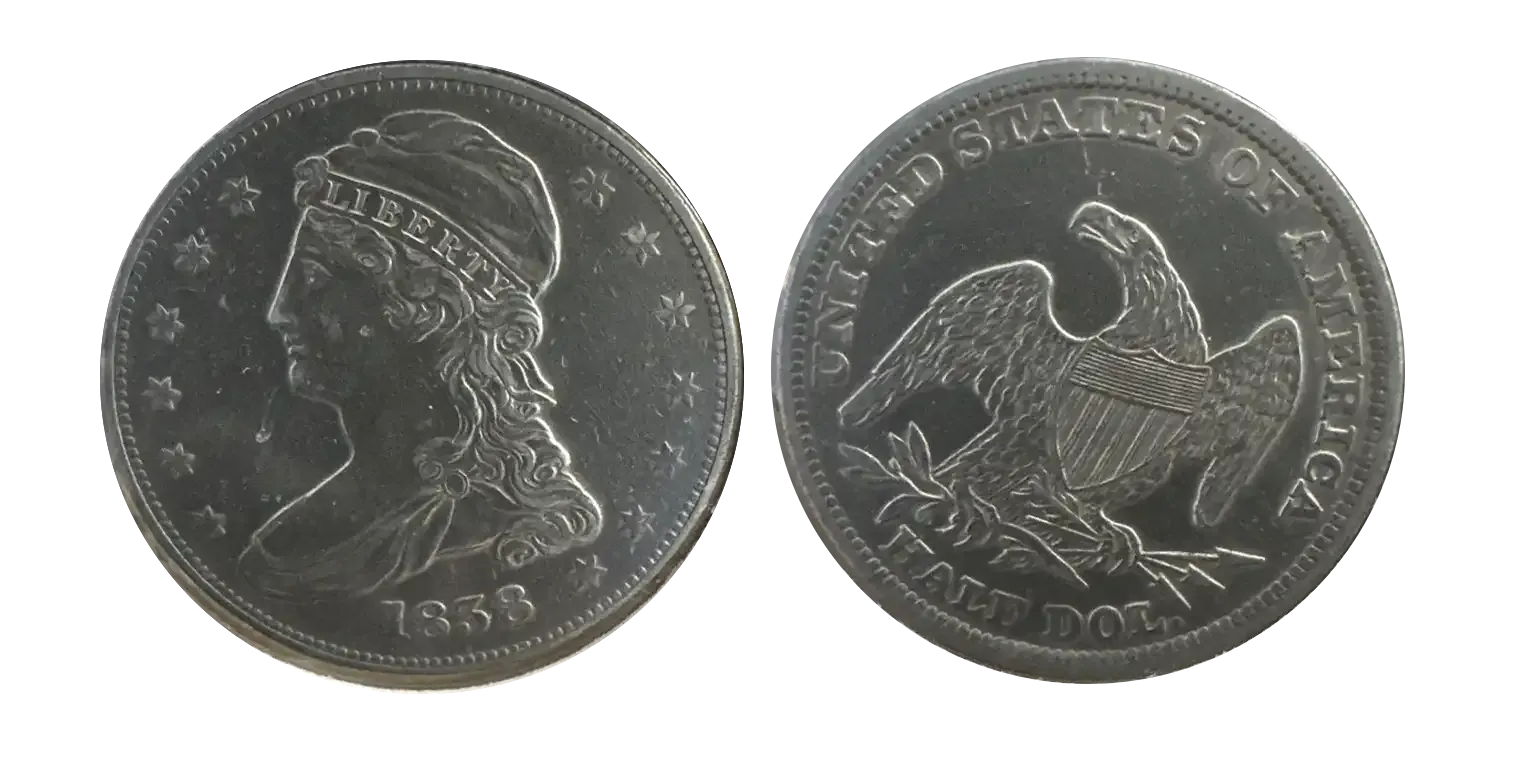
Obverse: The 1838-O Capped Bust Half Dime, showcases a classic design featuring Miss Liberty wearing a cap adorned with the word “LIBERTY” on the band. Her profile on the obverse faces left, symbolizing freedom and ideal beauty in early American numismatic art.
Reverse: The coin’s reverse is elegantly simplistic, displaying an eagle with outstretched wings, clutching arrows and an olive branch, a common motif representing readiness for war while desiring peace.
Inscriptions: “UNITED STATES OF AMERICA,” “5C,” and “1838.”
Year: 1838
Release Information
Release Date: The 1838-O Capped Bust Half Dime, was minted in the year 1838.
Series Context: As part of the Capped Bust series, this edition marked a transition in American coinage aesthetics from the early classical style to more intricate designs. Notably, this was the inaugural O-mint mark coin to signify its production at the New Orleans Mint, a newly established branch aimed at expanding minting capabilities in the United States.
Historical Significance: The coin holds historical value as one of the first products of the New Orleans Mint. Its release symbolized the growing sophistication and geographic reach of U.S. mint operations during the 19th century.
Quick Facts
- The 1838-O Capped Bust Half Dime, is one of the few coins with the unique “O” mint mark from this brief series, making it particularly attractive to collectors interested in mint mark varieties.
- Miss Liberty’s cap is sometimes referred to as the “Phrygian cap,” a classic symbol of freedom dating back to Roman times.
- This coin’s issuance from the New Orleans Mint marks a pivotal moment in expanding American minting operations beyond the original Philadelphia location, pointing to a burgeoning national infrastructure.
- Collectors prize the 1838-O for its intricate design details that capture the era’s numismatic artistry, drawing parallels with other early American coinage aesthetics.
- Interestingly, the 1838-O Capped Bust Half Dime, introduction coincided with a period of economic transition predating the Panic of 1839, adding a layer of historical intrigue to its value beyond monetary worth.
Collecting 1838-O Capped Bust Half Dimes
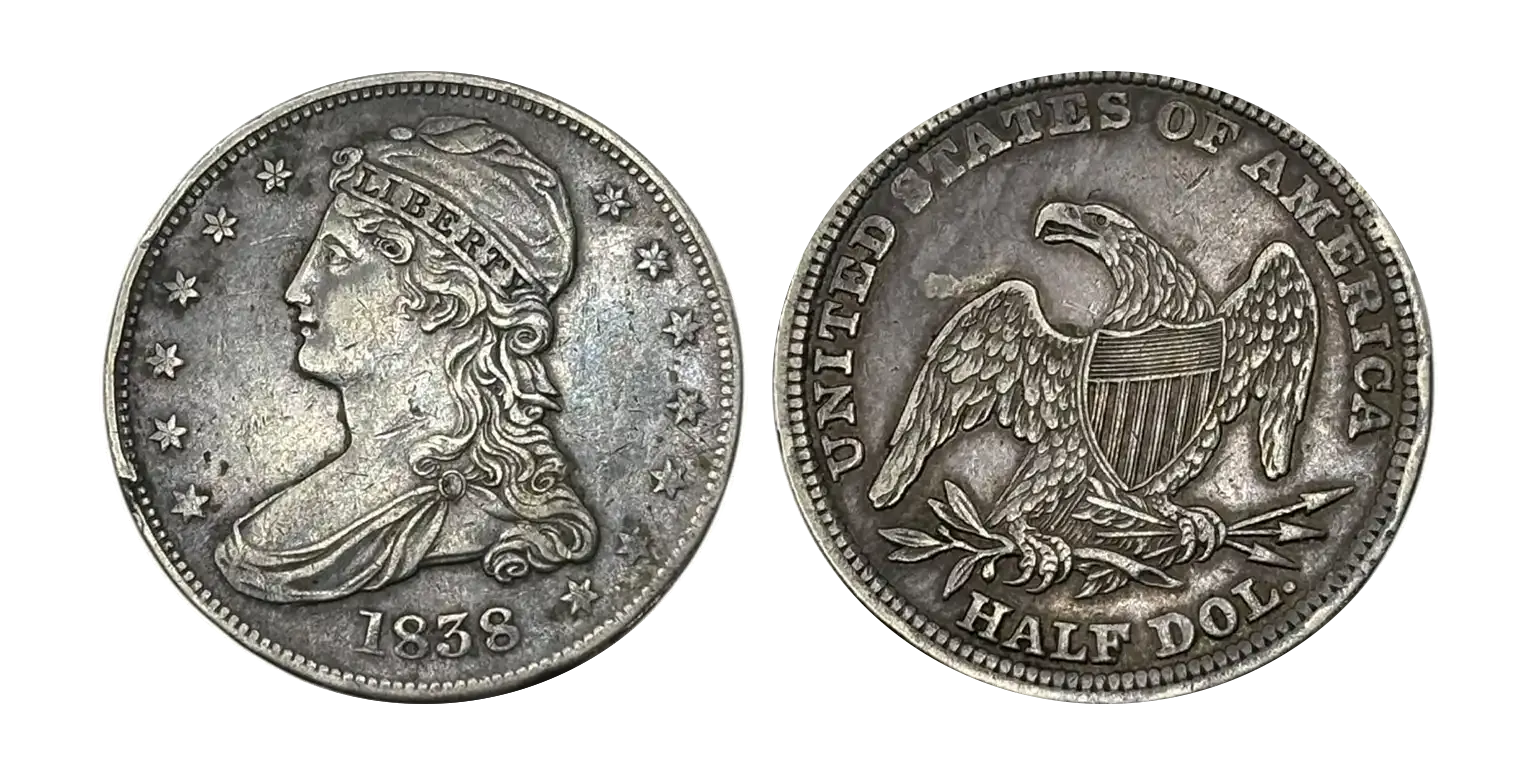
Collecting the 1838-O Capped Bust Half Dime is a rewarding endeavor filled with historical intrigue and numismatic appeal. Here are the steps to guide you in building a meaningful and valuable collection of this iconic piece.
Step 1: Research and Understand Background
Before diving into acquisitions, immerse yourself in the history of the Capped Bust design and specifically the 1838-O minting. Understanding the coin’s background enhances appreciation and can guide future purchases.
Step 2: Assess Market Demand and Price Trends
Keep up-to-date with current market trends by consulting price guides, auction results, and expert forums. While values can vary, a grasp on pricing trends can help identify good buying opportunities.
Step 3: Verify Coin Authenticity
Always verify the authenticity of your coins through reputable third-party graders such as PCGS or NGC. This authentication ensures the legitimacy of your collection and can significantly impact resale value.
Step 4: Focus on Condition and Rarity
Condition is crucial; therefore, focus on obtaining the best grade possible within your budget. Higher grade examples, especially those certified as MS65 or above, hold greater value and collector interest.
Step 5: Explore Varieties and Errors
Unique varieties and mint errors can add intrigue to your collection. Some errors in the 1838-O series are highly sought after, offering collectors a chance to add uniqueness to their sets.
Step 6: Create a Cataloging System
Maintain an organized record of your coins, noting specifics such as grade, purchase price, and provenance. A detailed cataloging system helps manage your collection efficiently and is invaluable for insurance purposes.
Step 7: Join a Coin Collecting Community
Networking with fellow collectors can provide insights and tips that are especially beneficial. Communities can introduce you to rare finds and help you stay informed about market shifts. Consider using tools like the Coin ID Scanner App on iOS and Android to streamline your research and buying processes.
By following these steps, you will not only build a refined collection but also immerse yourself in the rich history of the 1838-O Capped Bust Half Dime. Happy collecting!
FAQ on the 1838-O Capped Bust Half Dime
What is the historical significance of the 1838-O Capped Bust Half Dime?
The 1838-O Capped Bust Half Dime is notable for being the first coin struck at the New Orleans Mint. This coin marks a significant expansion of the U.S. Mint system, signifying growth in coin production across different regions.
How can I determine the value of my 1838-O Capped Bust Half Dime?
The value of an 1838-O Capped Bust Half Dime is influenced by its condition, rarity, and market demand. Examining recent auction results and consulting with trusted coin dealers are effective ways to estimate its worth.
What varieties exist for the 1838-O Capped Bust Half Dime?
The 1838-O Capped Bust Half Dime is known for its unique date placements and minor variations in die corrections. Collectors often seek these nuances, which can impact the coin’s desirability and value.
Are there common errors found in the 1838-O Capped Bust Half Dime?
Yes, some 1838-O Capped Bust Half Dimes exhibit die cracks and misaligned dies, which can add to their appeal among collectors. These errors often make such coins more desirable and sometimes more valuable.
How should I store my 1838-O Capped Bust Half Dime to maintain its condition?
Storing your 1838-O Capped Bust Half Dime in a cool, dry place inside a protective holder or flip helps prevent tarnish and damage. Avoid touching the coin’s surfaces directly and handle it by its edges to preserve its condition.
Where can I sell my 1838-O Capped Bust Half Dime?
You can sell the 1838-O Capped Bust Half Dime through coin dealers, at numismatic auctions, or online marketplaces devoted to rare coins. Make sure you get your coin appraised to understand its current market value before selling.
What is the importance of the 1838-O mint mark on this half dime?
The ‘O’ mint mark on the 1838-O Capped Bust Half Dime indicates it was struck in New Orleans, making it rare since New Orleans was a new mint location at the time. This historical and geographical uniqueness contributes to the coin’s value.
Has the 1838-O Capped Bust Half Dime increased in value over time?
Generally, the 1838-O Capped Bust Half Dime has appreciated due to its historical significance and rarity. However, its incremental value can vary depending on factors like its condition and collector interest levels.
What materials were used to make the 1838-O Capped Bust Half Dime?
The 1838-O Capped Bust Half Dime was composed primarily of silver, which was a standard for coins of that era. This composition not only contributes to its weight but also to its aesthetic appeal and durability.
Is it advisable to clean my 1838-O Capped Bust Half Dime?
No, cleaning can significantly reduce the value of your 1838-O Capped Bust Half Dime by creating scratches or removing the natural tarnish that collectors often value. It’s best to keep the coin in its original state and consult a professional if cleaning seems necessary.