
Understanding Half Dime Values: A Collector’s Guide
Understanding Half Dime Values
Half dimes, a historic United States denomination minted from 1794 to 1873, are miniature numismatic treasures that capture the attention of collectors. These coins, often confused with the nickel due to their similar current value, were the precursors in the American currency system to the five-cent coin we know today. Collectors prize half dimes for their rich heritage, intricate designs, and the stories they tell of the early U.S. Mint’s craftsmanship. With series like the Capped Bust and Liberty Seated, the half dime values offers diversity in design and historical significance, making it a unique and cherished possession within any coin collection.
For assistance with identifying and evaluating coins, you can use the coin checker app and the coin identifier app.
Popular and Rare Coins Table
| Name | Year | Price | Features |
|---|---|---|---|
| Draped Bust Half Dime | 1800 | $1,800 - $35,000 | Early design, low mintage |
| Capped Bust Half Dime | 1829 | $30 - $500 | Varied condition availability |
| Liberty Seated Half Dime | 1870 | $15 - $500 | Mint marks (CC, S) influence value |
| 1853 Half Dime with Arrows | 1853 | $20 - $1,200 | Notable variety due to arrows by date |
| 1794 Flowing Hair Half Dime | 1794 | $4,000 - $75,000 | First U.S. half dime, significant rarity |
| 1860 Liberty Seated Half Dime | 1860 | $10 - $300 | Introduction of “No Stars” variety |
| 1873 Liberty Seated Half Dime | 1873 | Varies by condition | Only produced in proof sets that year |
| 1796 Draped Bust Half Dime | 1796 | $2,000 - $50,000 | First year of the Draped Bust design, high appeal |
| 1867 Liberty Seated Half Dime | 1867 | $25 - $600 | Lower mintage, collector favorite |
| 1868 Liberty Seated Half Dime | 1868 | $25 - $700 | Mint marks assist in rarity assessment |
Key Dates and Identification
Key dates in the half dime series represent those years and varieties where the rarity and potential desirability are notably higher. Identifying these key dates often involves recognizing certain mint marks or peculiarities in the coin’s design or strike.
For collectors, knowing the key dates and understanding what makes a half dime valuable is crucial. Typically, coins minted in years with low production numbers or those with unique design elements tend to hold the most worth. For example, the 1802 Draped Bust half dime is extremely rare due to its limited minting and survival. Similarly, the first year of a design introduction, such as the 1829 Capped Bust half dime, is usually considered more desirable.
A coin’s condition, stated in terms like “Good” or “Uncirculated,” significantly affects its market value. Collectors should learn to identify wear on the design features, such as Liberty’s face and the eagle’s feathers, which are critical aspects of grading these coins.
Checking for mint marks, such as those found on coins produced at mints in Philadelphia (no mark) or New Orleans (“O”), is another essential practice. Understanding these elements, along with identifying errors like double strikes or planchet defects, can greatly enhance a collector’s appreciation and the half dime values of their collection. Learning to distinguish these specific attributes often separates novice collectors from seasoned numismatists. The subtleties in half dime prices and the ability to identify valuable specimens can make collecting these historical coins particularly rewarding.
Top 10 Rare Half Dime Coins
1794 Flowing Hair Half Dime
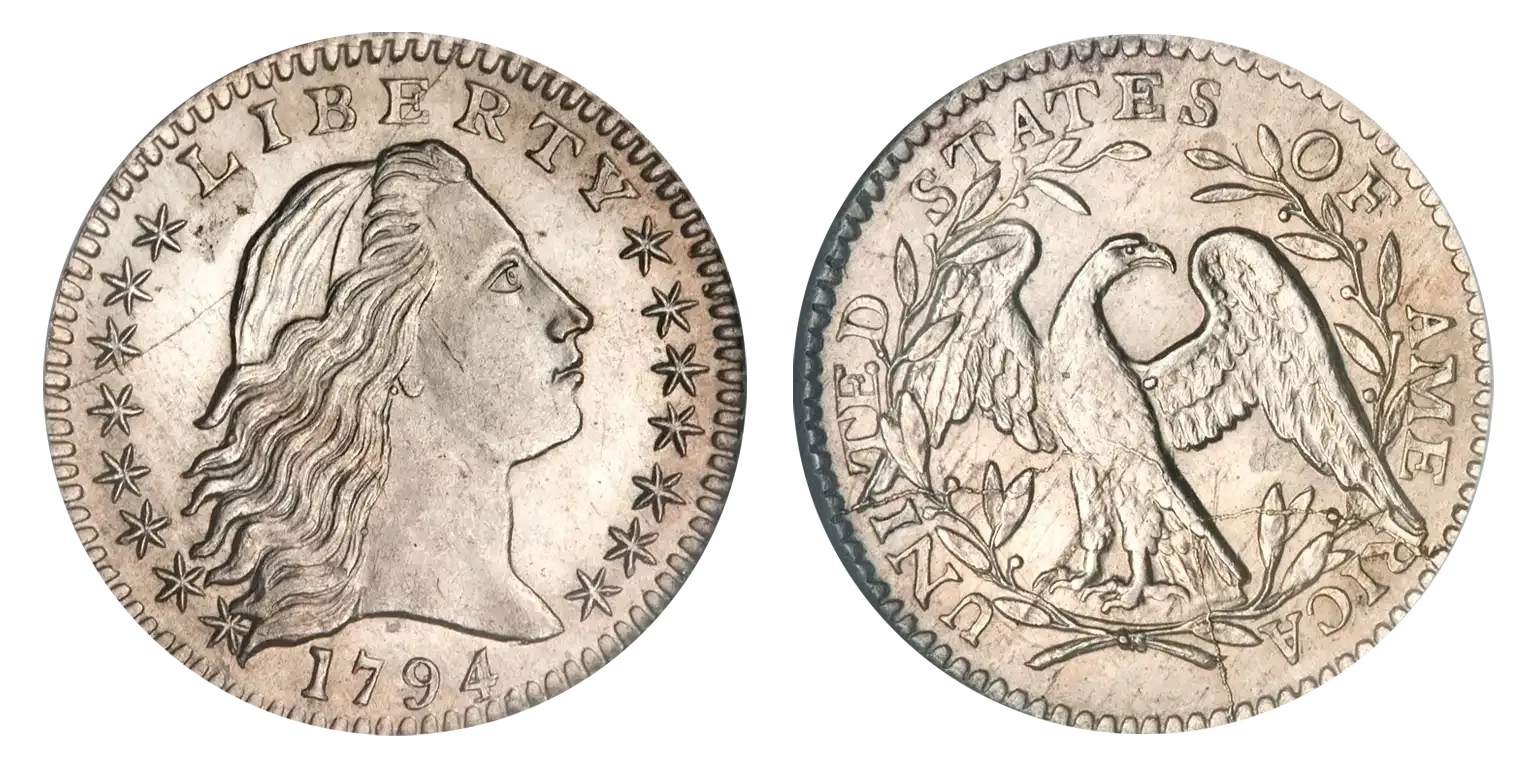
The 1794 Flowing Hair Half Dime is a highly coveted piece due to its status as the first half dime struck by the United States Mint. Collectors prize it for its historical significance and rarity.
- First year of production for U.S. half dimes
- Features the portrait of Liberty with flowing hair
- Mintage estimated under 7,800
This coin was crafted in silver and was a part of the Coinage Act of 1792’s drive to establish a standard currency in the post-Revolution United States. Its obverse displays Liberty with flowing hair, while the reverse showcases a simple wreath.
1802 Draped Bust Half Dime
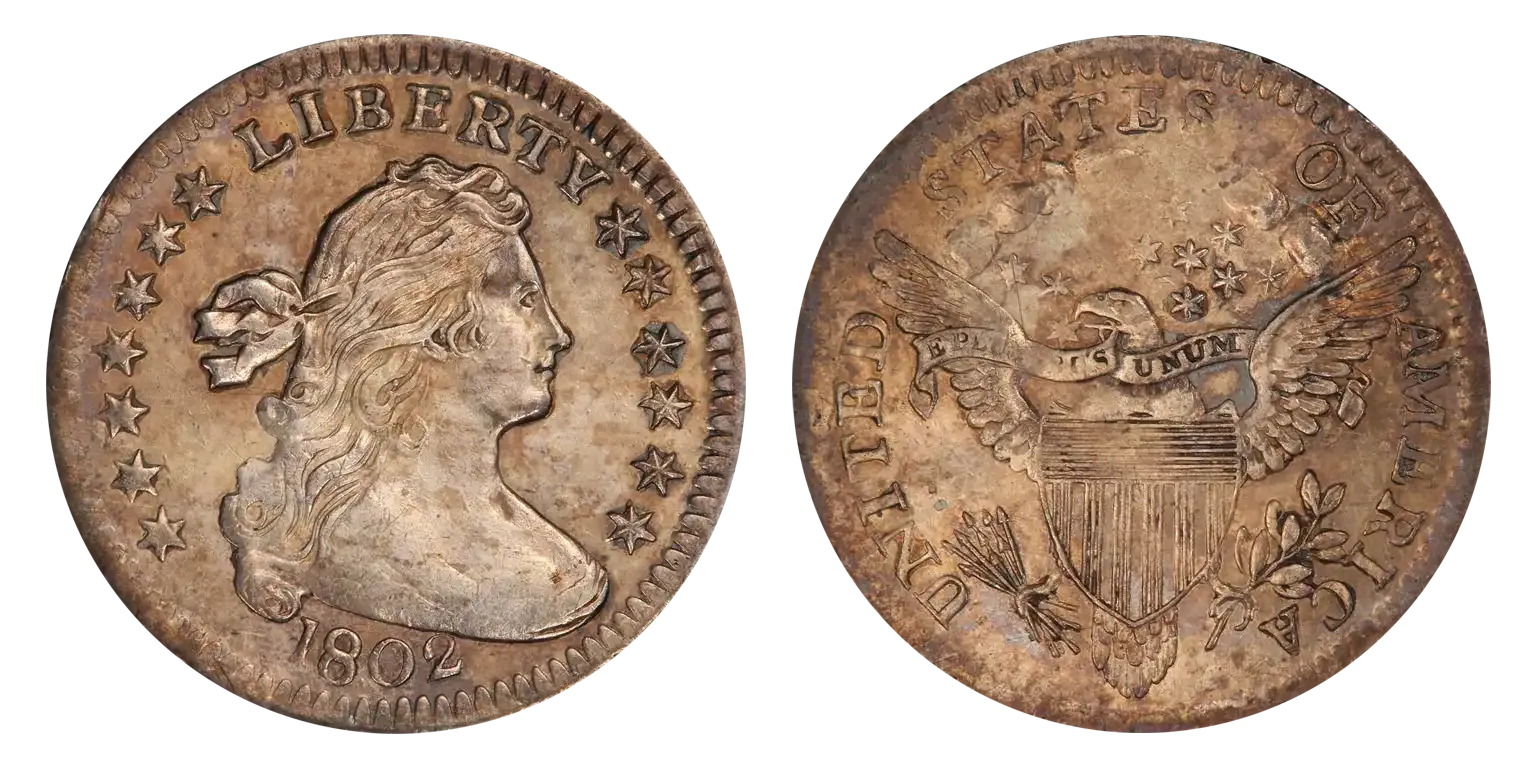
With only a handful surviving today, the 1802 Draped Bust Half Dime is one of the rarest U.S. coins. Its scarcity makes it tremendously sought after in the numismatic community.
- Extremely limited mintage
- High grade examples can reach six figures
- Noted for micro-details in Liberty’s hair
The 1802 Draped Bust Half Dime showcases a refined portrait of Liberty on the obverse and an intricately detailed eagle on the reverse, symbolic of America’s fledgling democracy.
1846 Liberty Seated Half Dime
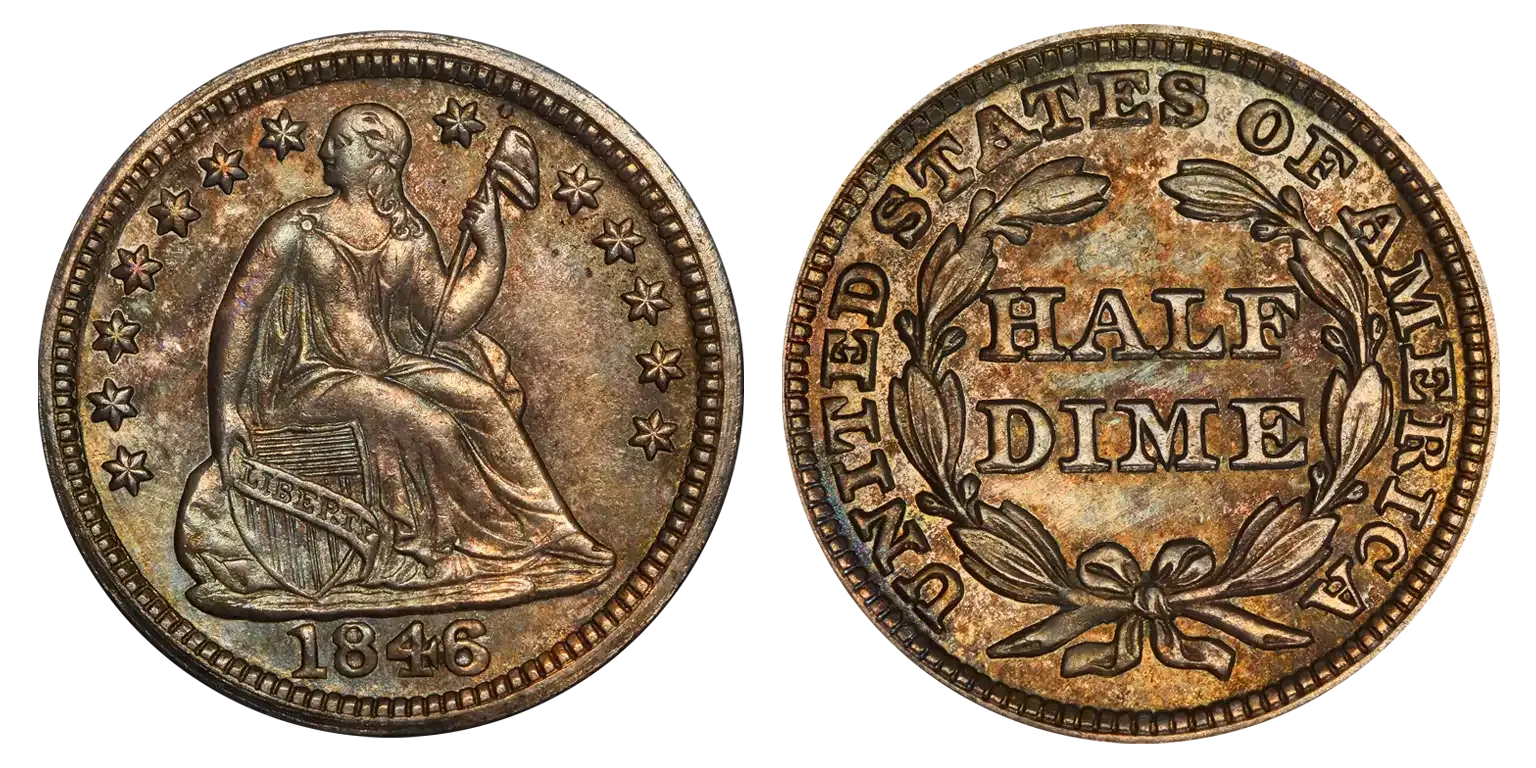
The 1846 Liberty Seated Half Dime is notable for its extremely low mintage, which makes it a standout in the Liberty Seated series.
- Only 27,000 minted
- Collectors prioritize examples with full, strike-free details
- Known for its crisp, detailed depiction of Liberty seated
This coin displays Liberty seated on a rock, with a shield in hand, indicative of themes of unity and strength that characterized this era.
1853 Liberty Seated Half Dime (Arrows at Date)
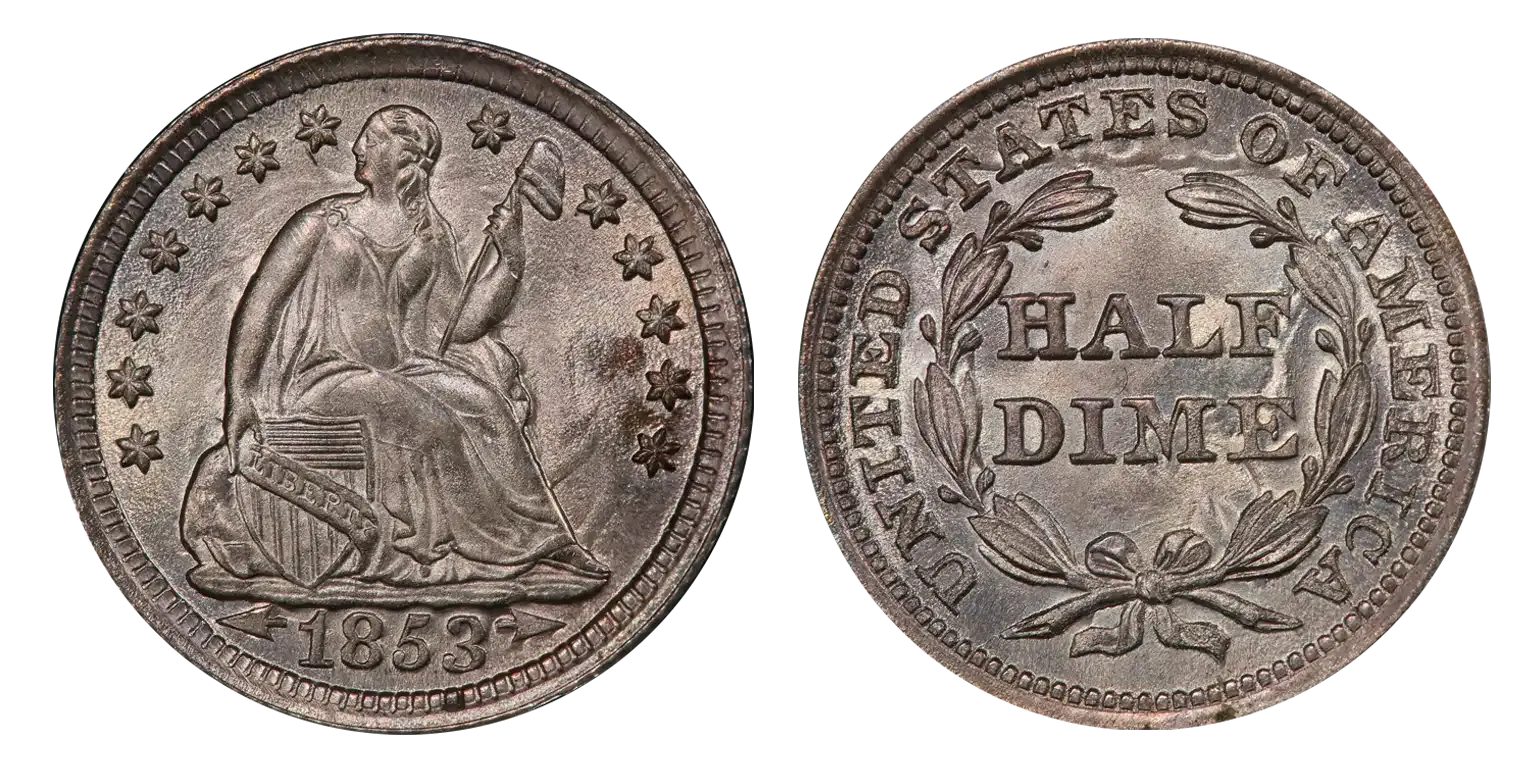
The addition of arrows by the date in 1853 marked a significant design alteration to signify a reduction in silver content, thus making these coins an attractive variety.
- Arrows signify a change in weight
- Affordable for most collectors
- Reflects mid-19th-century economic strategies
These coins are highly sought after by type collectors and those interested in 19th-century U.S. economic history, including changes in metal content.
1864-S Liberty Seated Half Dime
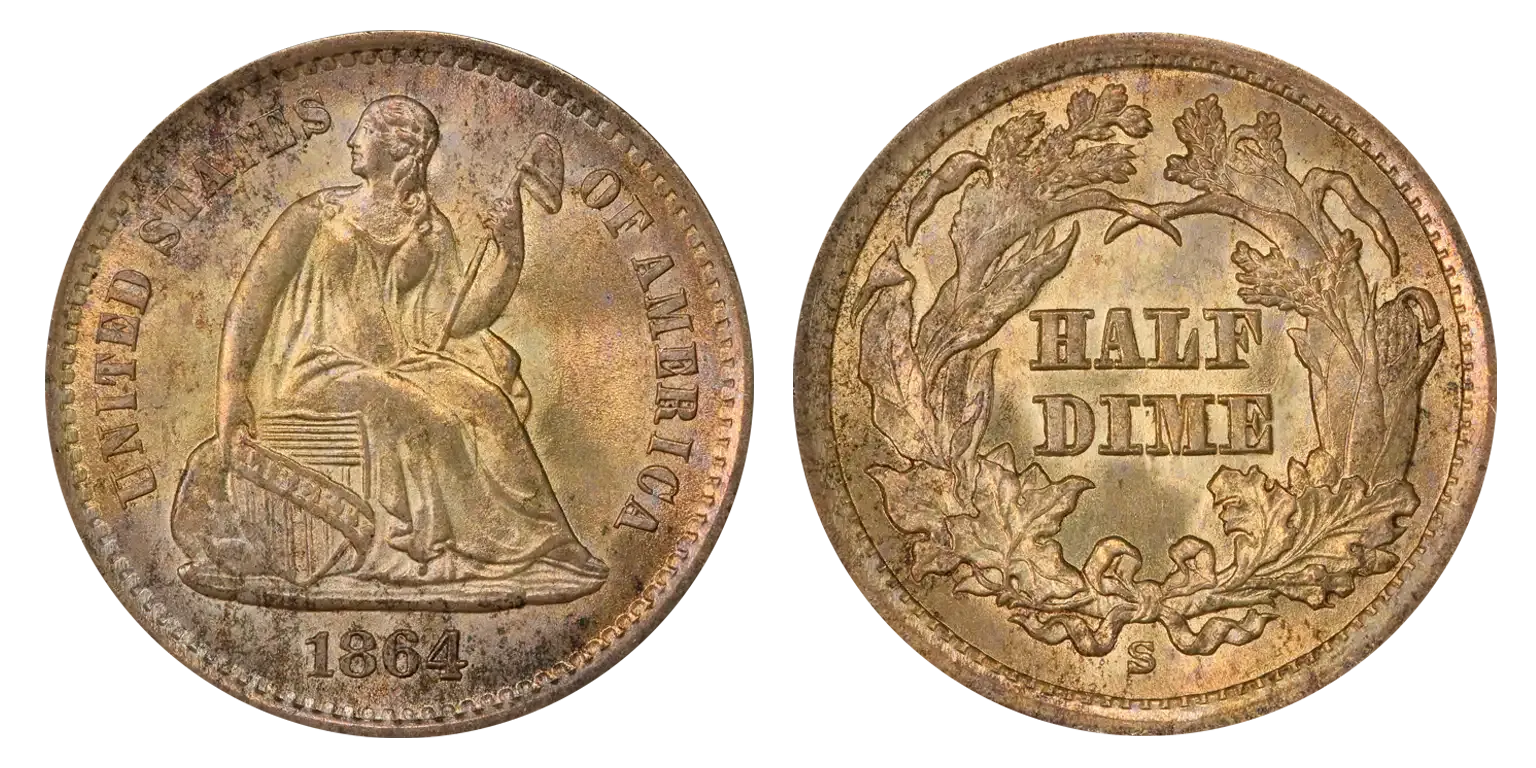
An extremely low mintage from the San Francisco mint makes the 1864-S Half Dime particularly scarce, mainly due to regional economic challenges during the Civil War.
- Just over 90,000 minted
- Higher premiums due to geographic rarity
- Interest piqued by Civil War-era heritage
The coin features Liberty seated with a wreath on the reverse and holds historical significance as it was minted during a tumultuous period in U.S. history.
1870-CC Liberty Seated Half Dime
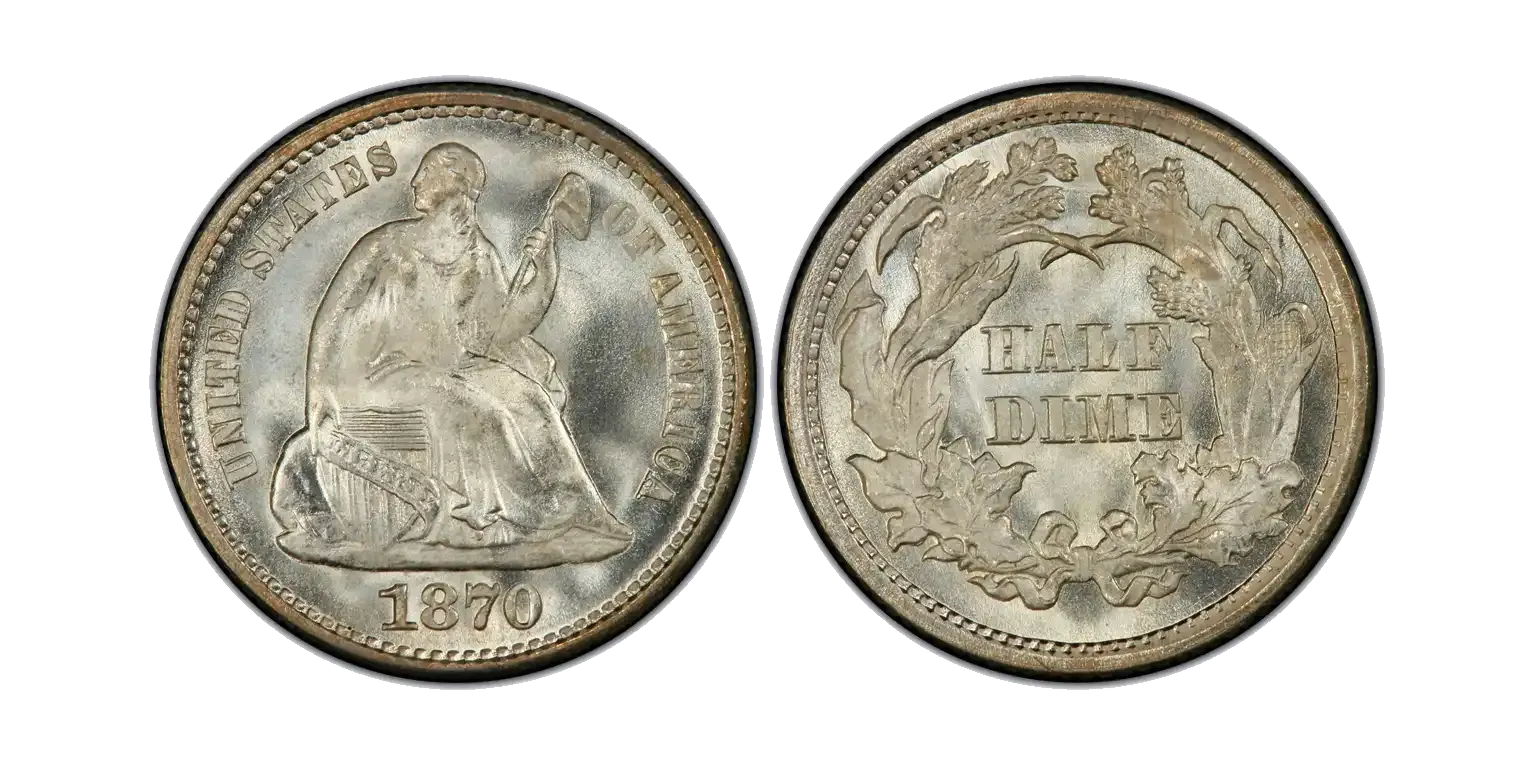
The 1870-CC is treasured for being one of the first coins produced at the Carson City Mint, representing a piece of the Old West.
- Low total mintage just under 55,000
- The first year of Carson City coin production
- Celebrated for its high-quality strikes
As a significant part of American numismatic history, this half dime is emblematic of western expansion and increased mint capabilities.
1796 Draped Bust Half Dime
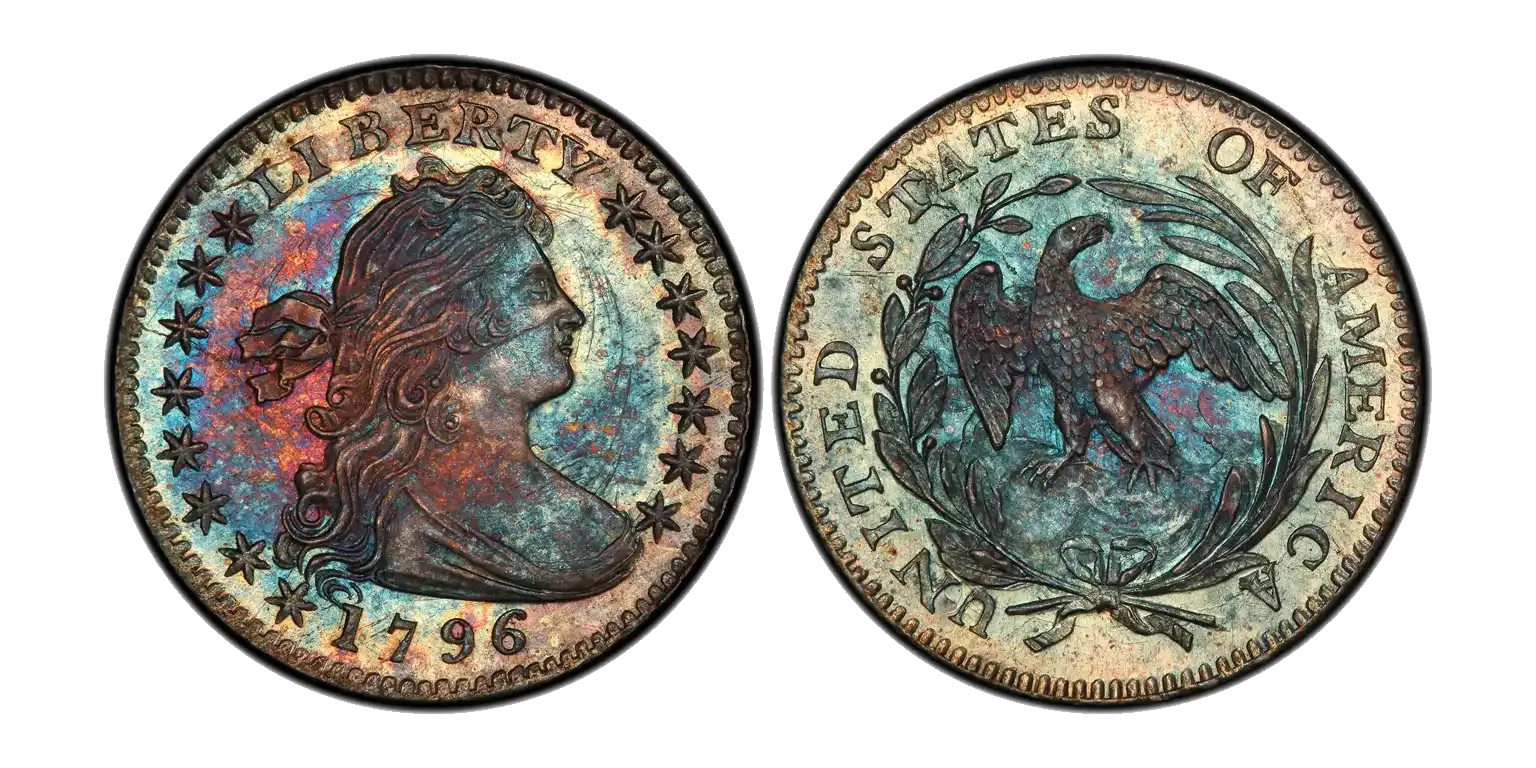
As part of the second year of the Draped Bust series, this coin remains historically significant and desirable due to its age and the adoption of improved coin designs.
- First year of the Draped Bust design
- Only about 22,000 minted
- Known for its detailed and momentous design change
This example highlights the transition in American numismatic artistry with a focus on a more regal portrayal of Liberty and an enhanced eagle motif.
1838-O Capped Bust Half Dime
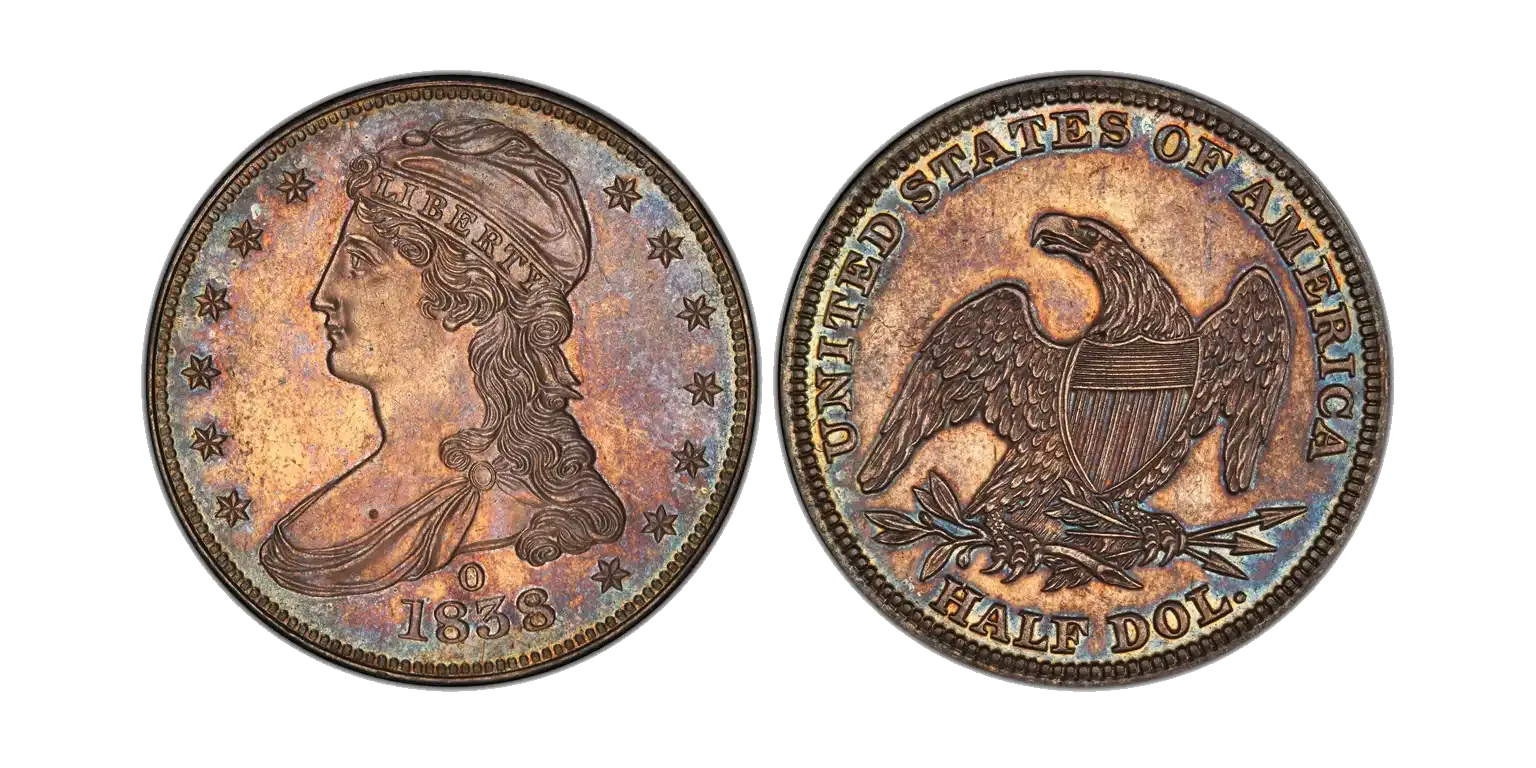
Being one of the first coins minted in New Orleans, the 1838-O represents a significant expansion in U.S. minting history.
- Overstamped “O” mint-mark for New Orleans origin
- Mid-size mintage but still requires premium
- Beloved for its historical mint association
This coin is especially noted for its New Orleans connection and distinctive capped bust design, reflective of its time.
1844-O Liberty Seated Half Dime
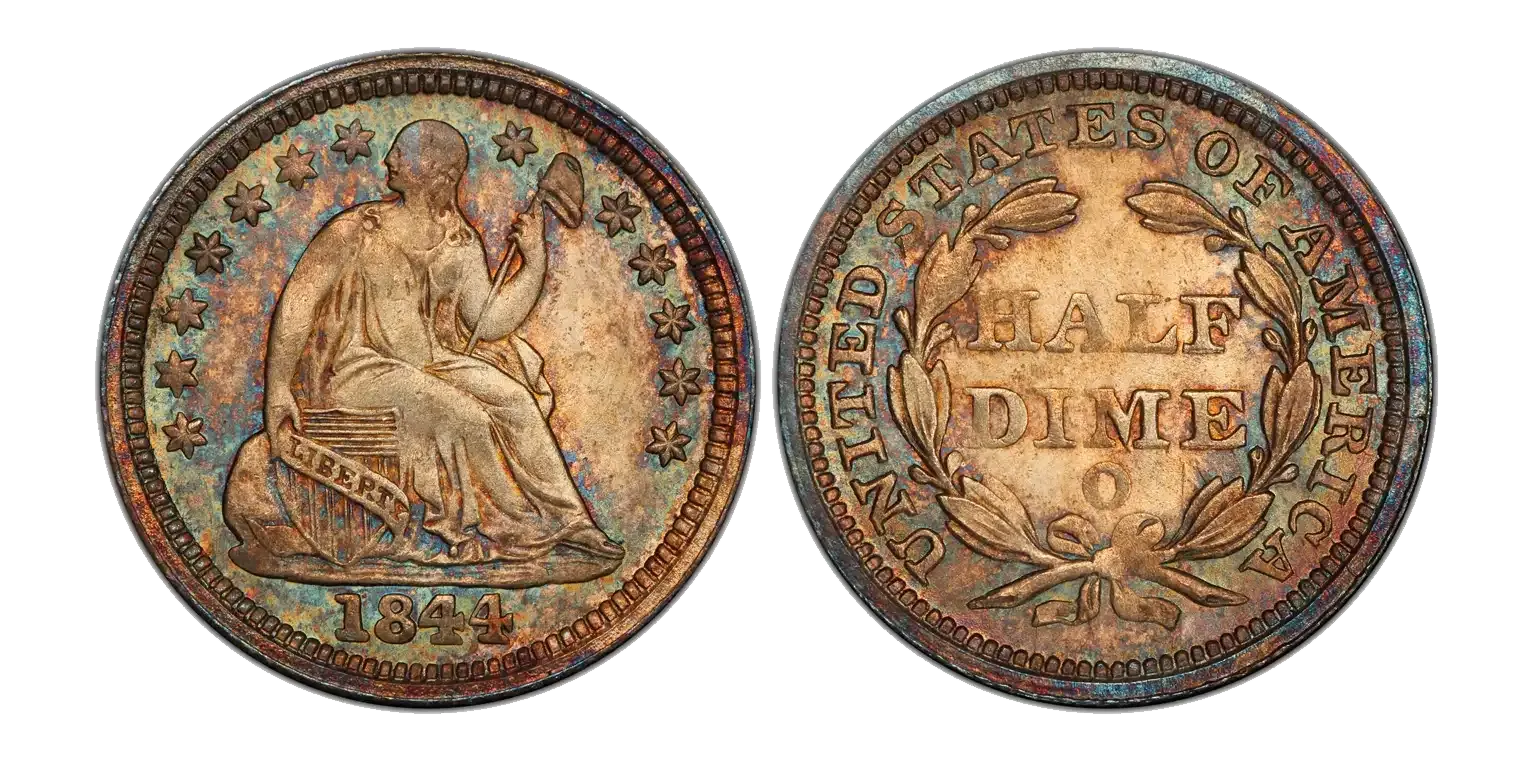
The 1844-O Liberty Seated Half Dime is treasured by collectors for its unique New Orleans origin and formerly unseen low mintage figures.
- Around 230,000 minted
- Renown for strong strikes and beautiful toning
- Often targeted by New Orleans mint enthusiasts
Characterized by its subtle aesthetic detail and historical significance, this coin is considered a prime collectible among series enthusiasts.
1873-S Arrows Liberty Seated Half Dime
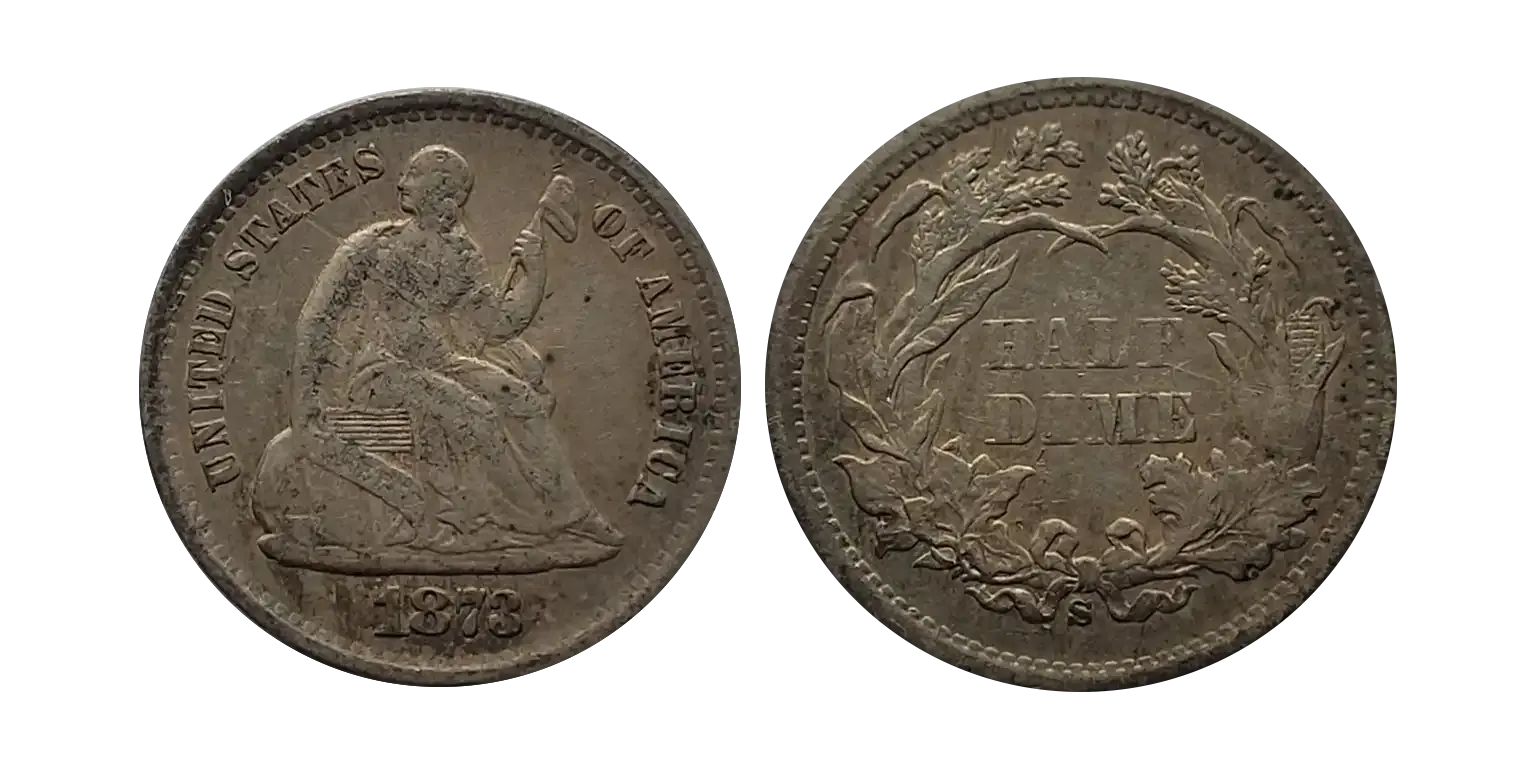
The 1873-S version with arrows is one of the most fascinating from the Liberty Seated series, marking it as a pivotal collectible due to its connection to regulatory changes.
- Arrows indicate weight adjustment
- Last year of the half dime series
- Associated with final minting cessation
Minted in the shadow of ending the series, this coin combines the allure of finality with the story of America’s evolving coinage policies.
Half Dime Values: Frequently Asked Questions
What is a Half Dime and why is it significant?
The Half Dime is an early American coin, minted between 1792 and 1873, valued at five cents. Its historical significance lies in its age and the role it played in the era’s monetary system, making it a fascinating collectible for numismatists.
How can I determine the value of a Half Dime?
To assess a Half Dime’s value, consider its condition, year, mint mark, and strike type. Consulting a coin grading guide or recent auction records can provide insights into market trends and potential prices.
Are all Half Dimes made of silver?
Most Half Dimes were made of silver, particularly coins minted before 1853. However, composition can vary with later issues, so checking exact specifications for a particular year is essential.
What are the most valuable Half Dimes?
Some of the most valuable Half Dimes include rare dates or unique errors, like the 1792 half disme or special varieties like the 1870-S. These are highly sought after and usually fetch higher prices due to their rarity and historical appeal.
How can I identify an error on a Half Dime coin?
Identifying errors on a Half Dime involves looking for anomalies such as doubling, off-center strikes, or incorrect date stamps. Specialist guides or professional evaluations can help confirm suspicions and establish value.
Is it worth investing in Half Dime coins today?
Half Dime coins can be a worthwhile investment if chosen wisely, focusing on rare dates or high-grade examples. The coin’s historical significance and demand from collectors often maintain or increase their value over time.
What types of Half Dimes are there to collect?
Collectors can explore various types of Half Dimes, including the Draped Bust, Capped Bust, and Seated Liberty varieties. Each type has its own unique design and history, adding depth to any collection.
Where can I sell my Half Dime coins?
You can sell Half Dime coins through online marketplaces, auctions, or coin dealers. It’s crucial to research potential buyers and ensure you receive fair market value by consulting recent sales and listings.
How should I store and protect Half Dime coins?
Store Half Dime coins in a cool, dry place—preferably in protective holders or albums—to prevent damage. Coin gloves are recommended for handling, as they prevent oils and fingerprints that could degrade the coin’s condition.
What does a mint mark indicate on a Half Dime coin?
Mint marks on Half Dimes signify the mint location, such as ‘D’ for Denver or ‘S’ for San Francisco. These marks can impact a coin’s rarity and value, making them critical for identifying key pieces in a collection.